
Signet vs Seal Rings: What's the Difference? | Australian Guide
A Modern Guide for Australian Buyers
In Australia's growing world of bespoke jewellery, from Sydney's heritage-lined streets to Melbourne's design-forward laneways, signet rings have made a powerful return. They're worn as heirlooms, style statements, family markers, and personal symbols. But as their popularity rises, so does the confusion around one common question:
What's the difference between a signet ring and a seal ring?
You'll hear the terms used interchangeably in antique stores, auction houses, and even luxury boutiques. But while they're closely related, they're not identical. The distinction is subtle, rooted in centuries of craftsmanship, symbolism, and function.
Understanding the difference helps you choose the right piece, whether you're honouring family heritage, creating a modern heirloom, or commissioning a bespoke design through Saint Stone.
At the Core: All Seal Rings Are Signet Rings - But Not All Signet Rings Are Seal Rings
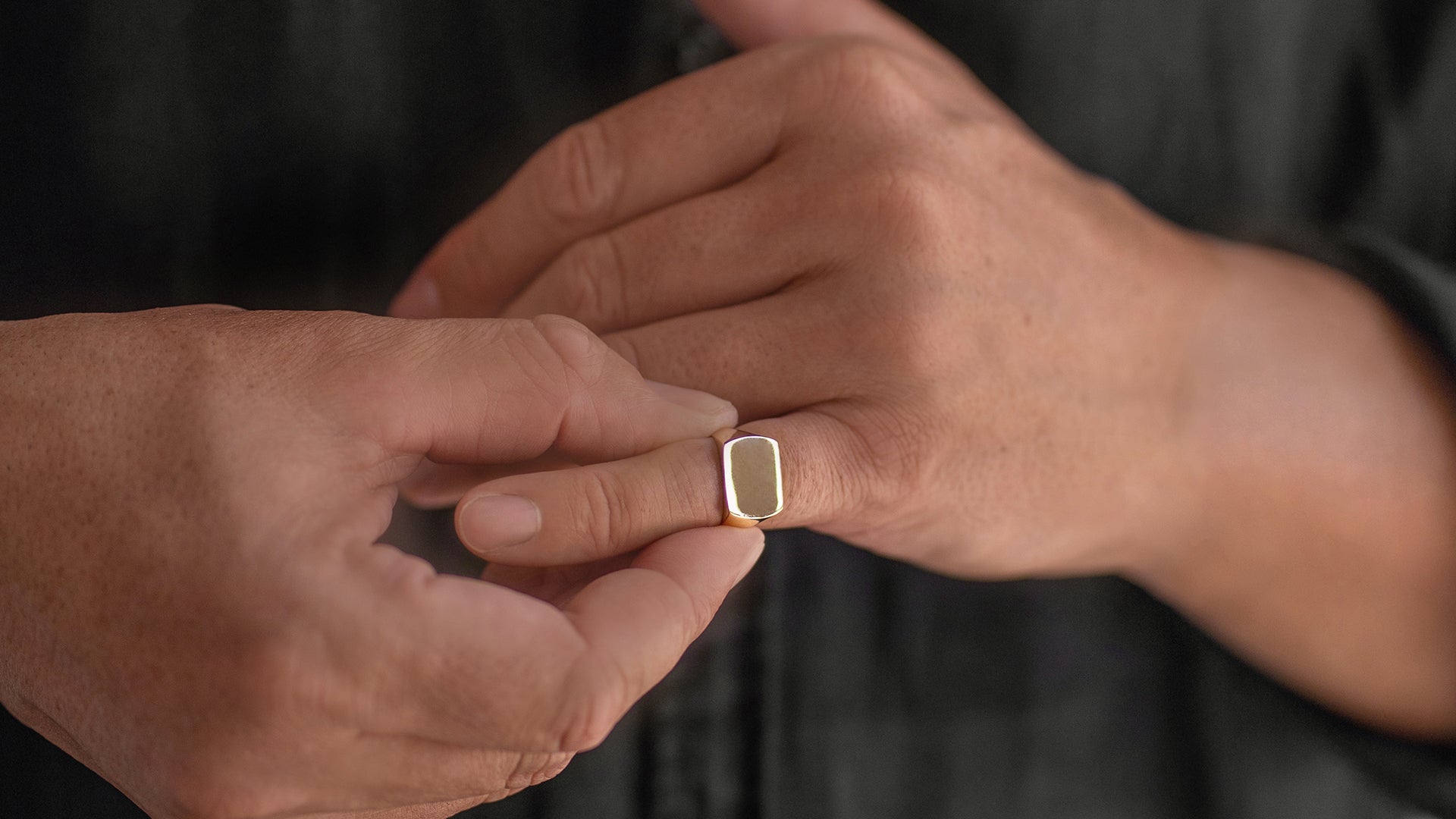
A signet ring is any ring that carries a personalised mark: a family crest, initials, emblem, or symbol. Historically, this mark represented identity. It wasn't just decorative, it was a signature, a wearable stamp of authority.
A seal ring, however, is a specific type of signet ring designed to create an impression in wax, clay, or soft material. These rings were carved in reverse, a mirror image, so that when pressed into hot wax, the imprint appeared correctly.
So while every seal ring is technically a signet ring, not every signet ring is capable of producing a functional seal.
The Carver's Secret: Orientation Matters
One of the clearest differences between a signet ring and a seal ring is something only a trained eye will spot: the direction of the engraving.
Seal rings are engraved backwards. Letters, crests, and symbols appear reversed when viewed directly.
Signet rings made for display are engraved the right way around.
If the design looks reversed and especially if it's deeply carved, you're likely looking at a true seal ring.
If the engraving reads normally, it's a signet ring intended for wearing, not stamping.
From Ancient Authority to Modern Identity
Seal rings have existed for thousands of years. Pharaohs used them to authenticate decrees. Roman senators sealed contracts with them. During the Middle Ages, a wax seal was legally binding; losing your seal ring meant losing your identity.
By the 18th and 19th centuries, signet rings evolved into more symbolic pieces. They represented lineage, heritage, and status, but many were never pressed into wax. They were made to be worn, admired, and passed down.
Today, in Australia's modern jewellery landscape, signet rings have become deeply personal. They're chosen to honour family, celebrate milestones, or express individuality, a tradition Saint Stone continues through bespoke craftsmanship and meaningful design.
Materials and Engraving: Depth Tells the Story
Seal rings traditionally feature deep intaglio engraving, carved into the surface, allowing wax to settle into the grooves and form a crisp impression. Hard gemstones like carnelian, bloodstone, and onyx were popular for their durability and ability to hold fine detail.
Modern signet rings, especially those made for everyday wear, may use surface engraving or laser etching. These look beautiful but aren't always deep enough to create a functional seal.
Neither is better; they simply serve different purposes.
Today's Signet Rings: Legacy Meets Personal Style
Most people today don't use seal rings to stamp wax. Yet the symbolism remains powerful. Family crests, monograms, academic insignia, and custom motifs all trace back to the signet ring tradition.
Luxury houses have embraced the form, but bespoke jewellers like Saint Stone keep the heritage alive through personalised craftsmanship, hand engraving, and meaningful storytelling.
Whether you want a ring that seals, a ring that symbolises, or a ring that becomes a future heirloom, the signet ring remains one of the most enduring pieces of jewellery in history.
What It Really Comes Down To
The difference between a signet ring and a seal ring lies in purpose and engraving orientation.
Signet rings represent identity.
Seal rings prove it, literally leaving a mark.
Both carry history. Both carry meaning. And both continue to evolve in modern Australian jewellery culture.
A Saint Stone Perspective
Crafted with intention. Designed with meaning. Made to last.
At Saint Stone, we believe jewellery should tell a story, your story. Whether you're creating a modern signet ring, restoring a family crest, or commissioning a bespoke seal ring, our team guides you through every step with transparency, craftsmanship, and care.
Founded in Australia and now serving clients globally, we specialise in pieces that feel personal, intentional, and timeless.
If you're considering a signet or seal ring, we'd love to help you design something meaningful.
Explore bespoke signet rings at Saint Stone or book a consultation to begin your custom piece.